Rather run than post: why I know the game and still do not play along
Two European silver medallists describe climbing fences and worrying about the rent. One sentence from that article describes my reality rather precisely – just from a different starting point.
During my five minutes of social media – for me, LinkedIn counts too – I came across a photo of a newspaper page. A British daily, sports section, written during the European Athletics Championships in Birmingham. The headline said, in essence, that it pays more to be a bad runner with good social media channels. Below it, two European silver medallists describe being chased off sports grounds and worrying about the rent.
My five minutes were up before I had finished reading. So: screenshot, for later. I never found the post itself again – so much for five minutes. The article was written by Molly McElwee for The Times.
I read it and then looked out of the window for a while. Not because anything in it surprised me. But because a single sentence in it describes my own situation better than anything I have written about it on this blog in eight years.
What the article says
At the start of the article, British sprinter Toby Harries calls a teammate and asks whether a silver medal actually comes with any money. A short silence at the other end. Then a dry no. He had almost expected it, Harries says, but wanted to be sure.
Harries has silver from the European Championships, silver from the Commonwealth Games and bronze from the Olympics. By his own account, he has earned nothing from them. His line on it is the best in the whole article: you cannot pay the bills with pride and honour.
The numbers behind it are quickly told. Through the British funding programme, Harries receives around £22,000 a year, tax-free. About £1,200 a month of that goes on travel, coaching and physiotherapy. That leaves less than £8,000 to live on. For a whole year. He earns the rest through social media, mentoring and talks.
His relay teammate Ben Jefferies, 26, also a silver medallist, is not even on the funding programme. Until recently he worked full-time as a coach in the United States to pay for his own running. A family friend gives him coaching sessions for free, and he gets physiotherapy in exchange for social media posts. He describes climbing over the fences of sports grounds and being chased off a few times. His comment, with the humour of someone who has come through it: luckily he is fast, and he was never caught.
An eighth place at a Diamond League meeting earned him $1,000. That, he says, kept him afloat. About the coming month, he says he is worried about the rent.
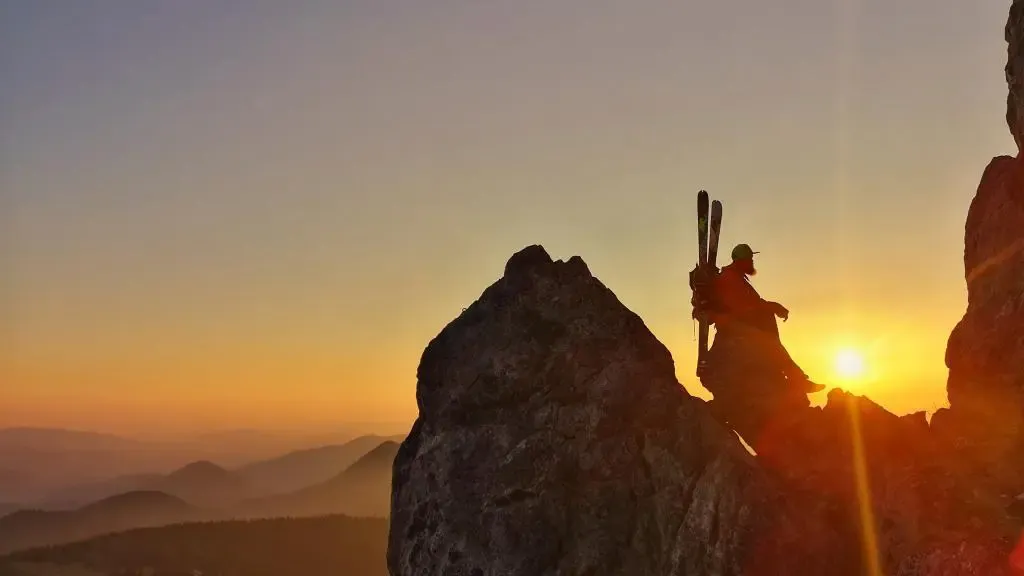
Three in the morning, somewhere in the Aosta Valley. The world shrinks to the beam of light in front of you – far away from social media and the like.
The sentence that matters
At one point, Harries explains why the contracts that still existed five or six years ago have disappeared. Shoe brands are moving their budgets from athletes to fitness influencers. Anyone who is not world-class or does not have hundreds of thousands of followers gets nothing at all. There is no longer anything in between.
Then he says the sentence the headline was made from, in essence:
You are better off being world-class on social media and a mediocre athlete than the other way round.
And because that is not bitter enough, a detail follows that really hit me as I read it: a year ago, a major brand told Harries he was too old. He was 26 at the time.
Why this concerns me
I am on the wrong side of that sentence. Very clearly, in fact.
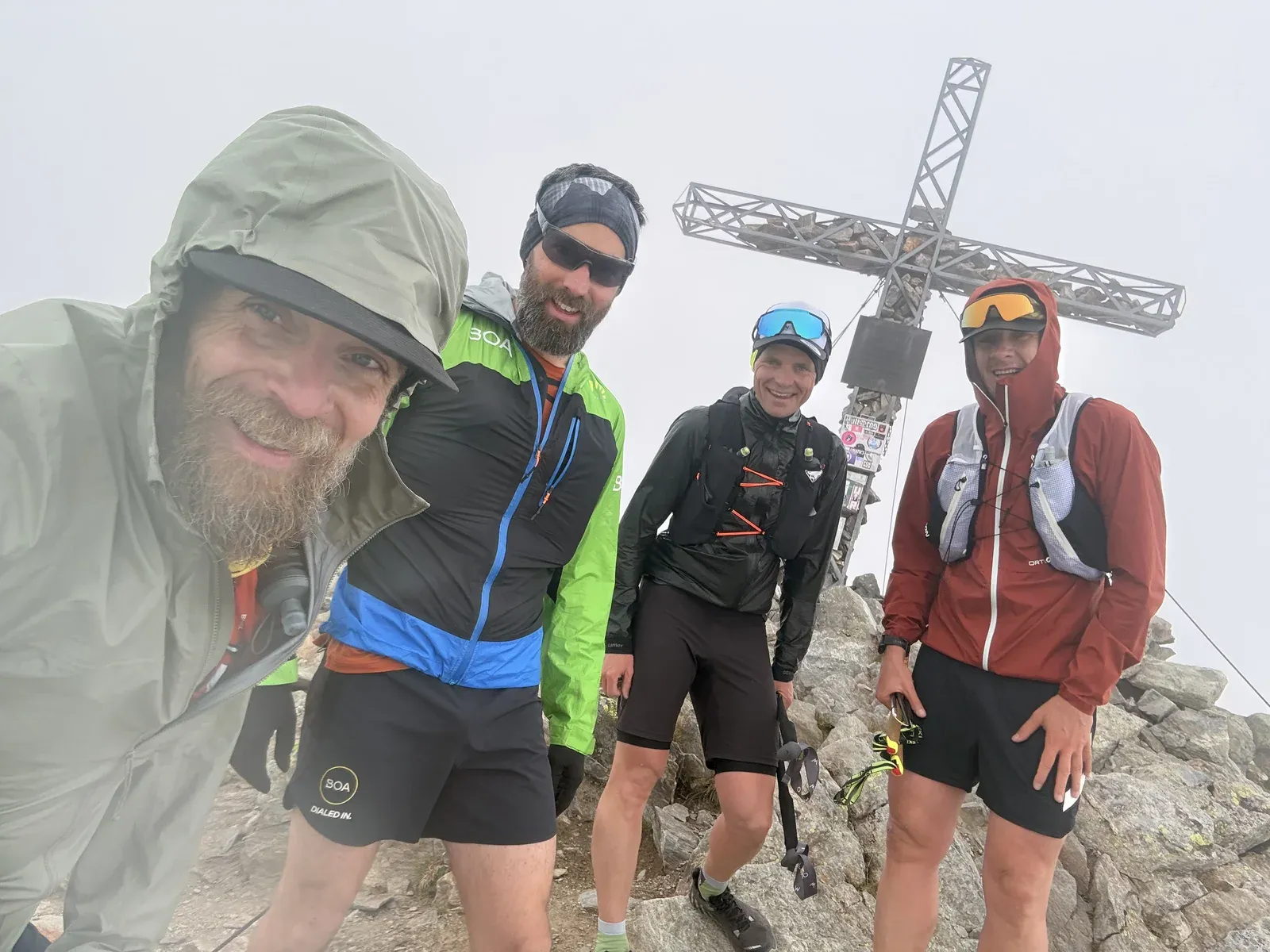
For context, without false modesty: ninth at UTMB, three wins at the Großglockner Ultra-Trail, tenth at the Tor des Géants, second at the Ultra Trail Snowdonia, several times Trail Runner of the Year. Fewer than 5,000 people follow me on Instagram, and lately my profile has mostly been filled by others: collaborations with my partner BOA, posts from filmmakers and race organisers. Most of the reach I have was built for me by other people.
World-class athlete, mediocre on social media. Exactly the combination that, according to Harries, pays off least.
Back in 2019 I wrote on this blog that in eight years of trail running I had won €600 in prize money and never received any money from sponsors. The basic point has not changed to this day. I do not live from running and never have.
Trail running itself, however, has changed almost completely since 2019. A niche has become a billion-dollar industry: according to market researchers, trail running shoes alone are worth almost ten billion dollars a year. At UTMB in Chamonix this year, brands flew in influencers, hosted their own races and community runs and, as a runner who was there writes, invited people with lots of followers rather than those who actually do something for the sport. There are full professionals. But there are probably more people to whom exactly that sentence applies.
Still, the difference between me and the two Britons is huge, and I do not want to play it down: they have no choice, I do. Jefferies has to play the game because the rent is due at the end of the month. For him, social media is not a waste of time but the condition for being able to continue his sport at all. My bills are paid by my company. I can afford to be a bad influencer. That is not an achievement, it is a privilege.
I know it would pay off
And yet, and this is the part that is harder for me than all the numbers: I could pretend I am above the game. But that is not true. I know exactly what I am leaving on the table.
Really, I should retire. Mid-forties, full-time entrepreneur, father of twins. I have achieved everything, and I do not depend on the money. Rationally, now would be the moment to switch: from performance to story. Fifteen years of ultra-trail running are an archive that could be put to work. With a wink, I call it legend status, and these days you only get that through social media. Results alone are not enough. The two silver medals in that newspaper article prove it impressively.
Nevertheless, I am not doing it. Because I still want to run myself. Not talk about running, not stage running. Run. At the TOR, in Rhêmes-Notre-Dame, I found out that the athlete in me is not done yet.
Five minutes
My day has 24 hours like everyone else’s. Some of them belong to the company, which this year shrank from eight people to three, some to my family, some to sleep, and the rest to training. What is left is nothing. Out of that nothing I would have to carve the hour a day that a serious channel needs: planning, filming, editing, posting, replying, replying again.
That is why my phone has a hard limit: five minutes of social media a day. Not as a symbol, but as protection. I know myself: without a limit, five minutes would turn into fifty, and those fifty would be missing from the mountain. Or from the kids.
Five minutes are enough to see what is going on. They are not enough to answer any of it properly.
The uncomfortable part
Which brings me to the real reason for this post. It is not about followers and not about sponsors, but about you.
My messages regularly contain questions. Real, good questions from real people:
Florian, how do I get faster downhill?
I want to run my first ultra, can you give me some tips?
Every one of these questions deserves an honest answer. And an honest answer to the first one is not a two-liner. It depends on who is asking, how long they have been running, what their knees can take and what their goal is. That takes time. It does not fit into five minutes, certainly not with several questions a day.
So many of them go unanswered. I know how that looks from the outside: he does not reply, he thinks he is better than everyone else. I am truly sorry about that. It is not a lack of interest, it is a time budget, and it is used up before I even open the app.
And then there is the other side. Around the TOR, I posted twice: once before the start and once after I dropped out. Under the second post, someone left a comment on Facebook in French, which translates as: tiresome staging.
I will admit that it bothers me. I am not a politician who simply shrugs something like that off.
Too old at 26
Finally, back to the detail that has stayed with me most. A European Championships silver medallist and Olympic bronze medallist was told at 26 that he was too old for a partnership.
I am almost twice his age and still start among the Top Runners at the biggest races in the world. Not because I have found some special system, but because nobody ever paid me, and so nobody could ever tell me when I was finished. What I lacked over the years set me free in the end.
Perhaps that will cost me the legend status. I can live with that. I was never particularly good at marketing myself. I was quite good at running. And for the years I have left of it, that simply matters more to me.
Yours, Florian aka Trailbeard
Tags
Interested in a talk?
The strategies and experiences in this article are part of my talks. I show how insights from ultra trail running can be applied to business and personal development.
Book me as a speaker