29 October 2016, 3:40 a.m. The Austrian national team is leaving Braga for the Trail World Championships. My plan was simply to go for a run: 85 kilometres through Peneda-Gerês National Park, with 4,680 metres of climbing. But after the flag parade and opening ceremony, there isn’t much left of “simply”.
Professionals in national team kit everywhere. And me among them, suddenly feeling a kind of national pride I haven’t known before. I want to do Austria proud. That thought creates pressure I unsuccessfully try to get rid of with five trips to the toilet before the start.
Now here I am. Nervous. With a full stomach. Ready.
Rio Caldo, five in the morning
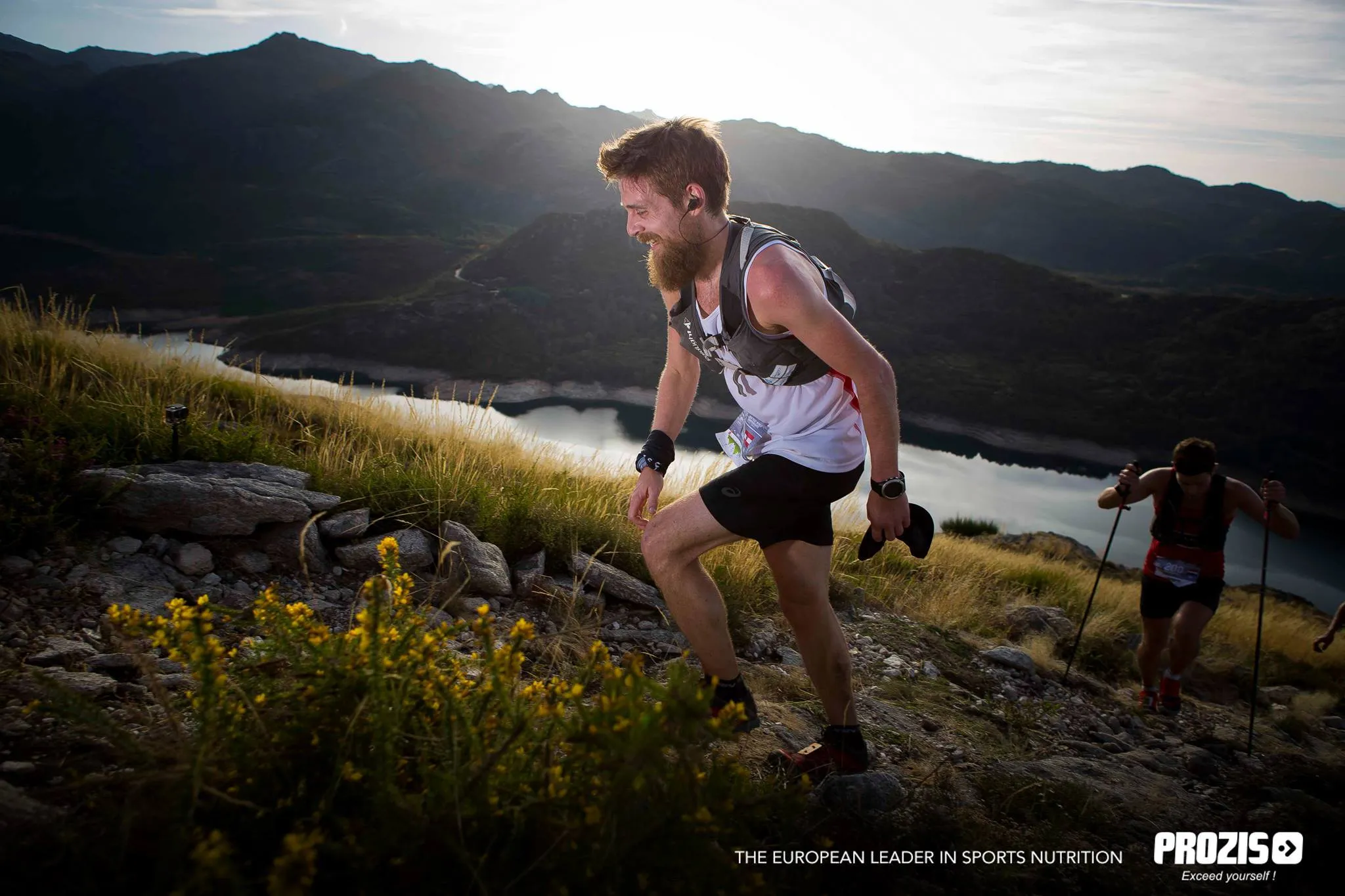
The start is fast. Very fast. I resist getting carried away and run at my own pace, with some mellow music in my ears. First two kilometres on the road, then 700 metres of climbing over the next three.
All around me, people are already breathing hard. Suddenly the nerves disappear: they’re only human, too. I’ve trained well, I have experience and I love running. Time to release the brakes.
As if my teammate Michael Kabicher has just had the same thought, we launch into the descent together. We keep passing runners all the way to the first aid station at kilometre 15. We cross the timing mat after 1:22 hours, somewhere around 60th place. Fifteen kilometres with roughly a thousand metres of climbing, and at these World Championships that puts you in the middle of the field.
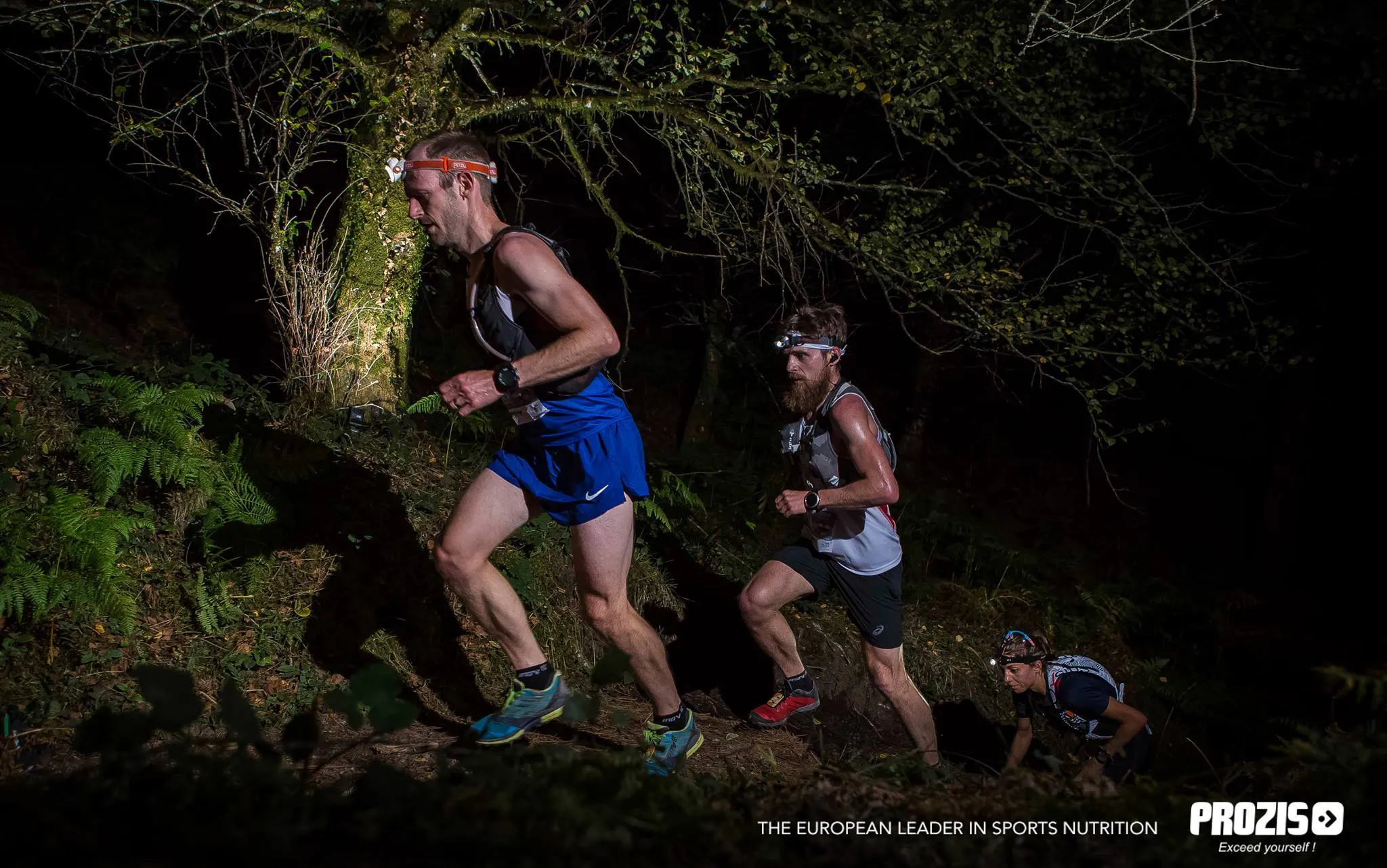
On the second climb it’s still dark, but already unpleasantly muggy. I’m thinking about the battle with the heat at the 2015 UTMB. I want to cover as much ground as possible before the sun really starts beating down. It’s a deliberate gamble: take more of a risk now so I can ease off later.
At kilometre 30, after 2:58 hours, I’m up to 30th. My wife is waiting with fresh flasks and gels. The pit stop works perfectly. And I’m out again.
Serra Amarela: switch off the ego
I’m wary of the next fifteen kilometres. A lot of climbing, not much descending, all the way to the highest point on the course. By now I’m running alone, and it’s hot.
This is where a tactic helps me that still works when there’s not much processing power left upstairs: at every aid station, I start at zero. If I pass someone, I add one. If someone passes me, I subtract one. As long as I’m somewhere between plus and minus five, I don’t worry too much about my position.
Advanced maths. Still manageable when your brain has more or less checked out.
Florian Reichert passes me pretty comfortably on the climb. I could latch on. Push a little harder, grit my teeth a little more. But I’ve been watching him: he’s stronger uphill, I’m stronger downhill. Why should I run his race on this particular section?
So I let him go. I had already passed someone just after the aid station. With him going past me, I am back to zero.
I often see runners trying desperately to hang on to someone who has just gone past them. At this stage, everyone has their ups and downs. Maybe he’s just having a good ten minutes. If I sacrifice my rhythm to follow him, ten minutes later we might both be standing at the side of the trail, completely spent.
The number keeps my ego occupied while my legs get on with their job.
Not everything works quite so neatly, though. My two half-litre flasks are running very low on this section. For the last thirty minutes, I ration the remaining hundred millilitres into little sips. At the aid station, I’m at plus six. That helps my head. My body mostly wants a drink.
I pour the cola down so quickly that it comes straight back out through my nose. Not my most dignified moment in national team kit.
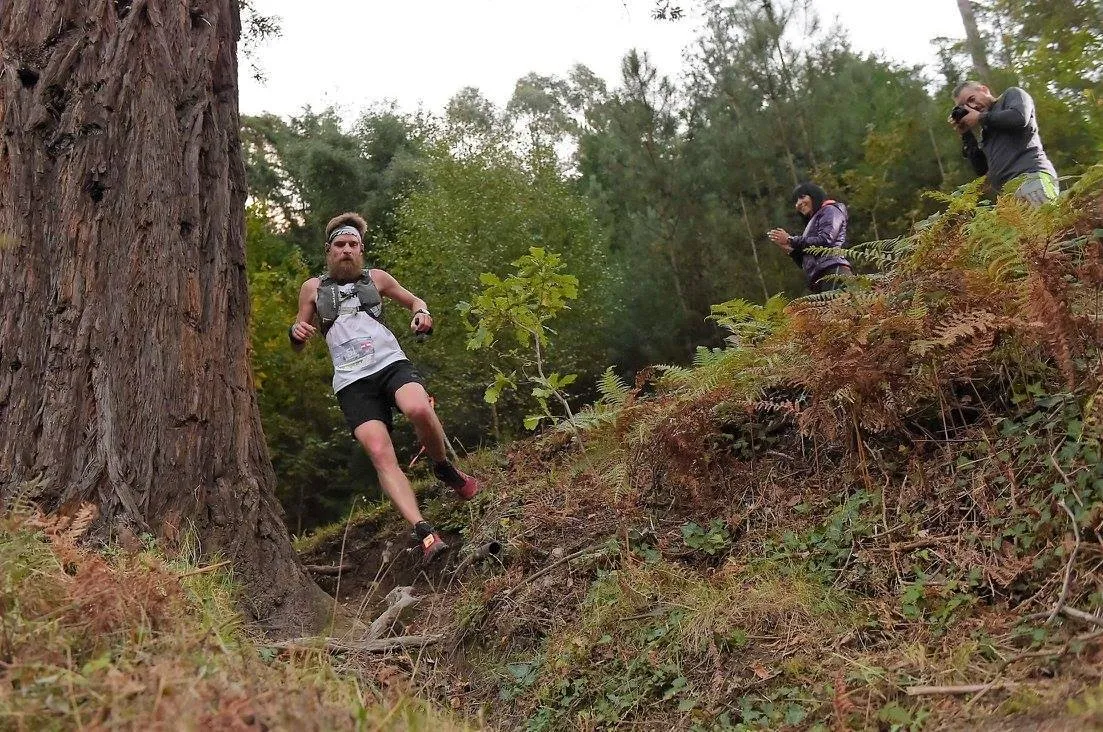
Then nine kilometres downhill. Hard, fast, technical. In less than 38 minutes, I’m in Lindoso, now in 21st place.
A castle I didn’t see
Swap flasks, grab gels, go. Only later does my wife tell me that the aid station was beside an incredibly beautiful castle. I’d be lying if I claimed to be fully appreciating the scenery at this pace.
The next section looks harmless on the course profile. Eight kilometres, a relatively small climb. In the heat, it drags on anyway. I stop at every stream, dunk my cap and pour water over my body. Sometimes even a puddle will do. It costs time, but it helps.
Soajo: plus three. Going well.
I know the final big climb from our course recce: 700 metres of ascent in four kilometres. I’m dreading it. It takes what feels like forever. Passing Tom Owens gives me a huge lift. Just don’t make a mistake now.
Mezio and the supposedly downhill section
I arrive in Mezio in 17th. Catch my breath, get my mandatory kit checked. As I read the profile, the final twelve kilometres are downhill.
At first, they are. Then a runner passes me. Minus one. Fine.
Less fine is the wall rising in front of me. A hundred metres of climbing, seemingly vertical. Down again. Up again. I almost have to laugh, imagining the course designer grinning as he adds these little cruelties.
Only a kilometre and a half left. I can already see the finish town. Surely it’s an easy run-in on the road from here.
Think again. Another trail around the edge of town, up and down.
I imagine myself as an ant under a child’s magnifying glass. The sun is burning. But instead of dying, I give the child the finger: is that all you’ve got?
In my head, that is. Not actually.
A final cobbled descent, then there’s Julia, handing me the Austrian flag. I leap across the finish line. 18th place, 9:25:32. Happy with myself and the world.
A lot came together that day. Including the decision to let another runner go.
What I take from it today
That moment with Florian Reichert also stays with me as a business owner. I had a goal and plenty of ambition. Yet at that point, letting the gap between us grow was the right decision. I knew where I was stronger and what keeping up with him would have cost me.
For me, that raises a very specific question about leadership: am I changing my plan because I’ve understood something? Or because I can’t stand someone else being faster right now?
I recognise that pause between stimulus and response from my red stop sign for negative thought spirals. First look at what’s actually happening. Then decide. In Portugal, sometimes two words were enough: minus one.
The counting rule didn’t run the race for me. It helped me stick with my decision. Having a clear goal in mind goes well with giving yourself the freedom not to react to every move the others make along the way.
Another race where mind, body and the competition had plans of their own: Ninth at the UTMB — still hard to believe.
Interested in a talk?
On stage, I bring together my experiences as an entrepreneur and ultra trail runner: decisions under pressure, responsibility, and balancing performance, work and family.
Enquire about a talk